As a former math teacher, I remember regularly asking my students to “show your work.” In mathematics, the answer is important, but understanding how someone arrived at that answer is often even more valuable. I wanted to see the process they used, the assumptions they made, and whether they truly understood the problem they were trying to solve. Showing your work revealed real understanding.
Yesterday, we had the opportunity to do exactly that as we hosted Senator Maggie Hassan for a tree care industry site visit at ArborTech in Gilford, New Hampshire.
More than 30 people attended, including members of the Senator’s staff, a New Hampshire state senator, representatives from the Small Business Administration and Congressman Chris Pappas’ office, TCIA members and staff, utility representatives, and tree care professionals from around the state.
Our agenda included demonstrations of crane-assisted removals and aerial rescue procedures, followed by a roundtable discussion on workforce development. On paper, that’s what happened. What I’ll remember most, though, was how interested everyone was in learning from one another.
Right away, what struck me was that Senator Hassan seemed familiar with many of the issues we planned to discuss, asked thoughtful questions throughout the day, and took the time to speak directly with the people performing the work. From the conversations I observed, she seemed interested in understanding not just what arborists do, but why they do it that way and the challenges facing the industry.
What really stood out during the demonstrations was how quickly a complex issue can become understandable when you see it in person.
During the crane removal demonstration, Peter Gerstenberger explained how tree care companies use cranes and aerial lifts to safely remove damaged or unstable trees that may be too hazardous to climb. He also walked the group through the industry’s long-standing effort to establish an OSHA Tree Care Standard, noting that many common tree care operations don’t fit neatly within existing workplace safety regulations.
The aerial rescue demonstration reinforced a similar point. As climbers demonstrated the specialized techniques used to reach and rescue an injured worker aloft, the conversation turned to the extensive training, certification, and recertification required to perform the work safely.
Seeing these operations firsthand provided an opportunity to demonstrate both the complexity of the work and why TCIA has long advocated for safety standards designed specifically for the tree care industry.
The visit was a reminder that advocacy often begins with information, but understanding comes from experience. A briefing paper can explain how cranes are used to safely remove hazardous trees or how trained climbers perform aerial rescues. But standing a few feet away as a large section of a tree is lowered safely to the ground, or watching a climber demonstrate an aerial rescue, creates an entirely different level of appreciation. Some things simply have to be seen to be fully understood.
That’s why TCIA is investing more time in opportunities like this.
One of our goals is simple: help policymakers understand what tree care professionals do every day. Not through statistics or talking points alone, but through direct conversations with the people who own the companies, operate the equipment, train the workforce, and perform the work.
The workforce development discussion that closed the day quickly turned to how we attract and retain more people in arboriculture. The discussion highlighted the importance of continuing to promote tree care as the skilled profession it is.
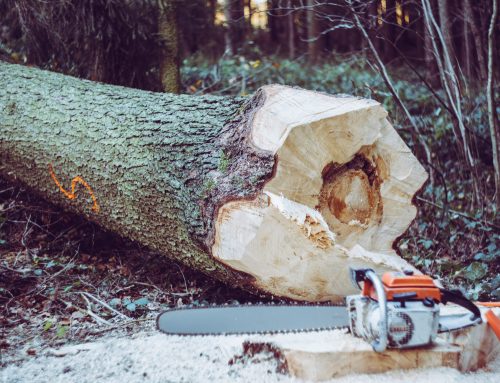
One longtime tree care professional described why he is still in the industry as having “sawdust in your blood.”
I liked that phrase. It captures the passion many people bring to this industry. But passion alone isn’t enough to build the workforce we’ll need in the future. We also have to help others see the opportunities that exist in arboriculture and understand the value this profession provides to communities every day.
Yesterday was the first in what we hope will be a series of policymaker visits.
Walking away from the event (and looking forward to trading my dress shoes for anything more comfortable for the drive home), I found myself thinking about something that often gets lost in conversations about politics and advocacy: most elected officials genuinely want to understand the issues they’re asked to address. The more opportunities we create for them to see our industry firsthand and hear directly from our members, the better equipped they are to make informed decisions.
That’s why visits like this matter.
Not because they change minds overnight, but because they help build understanding. They give policymakers an opportunity to see the work, meet the people behind it, and better understand the challenges and opportunities facing our industry.
Just like I asked my math students years ago, sometimes the best thing you can do is show your work.
Have a wonderful long weekend!